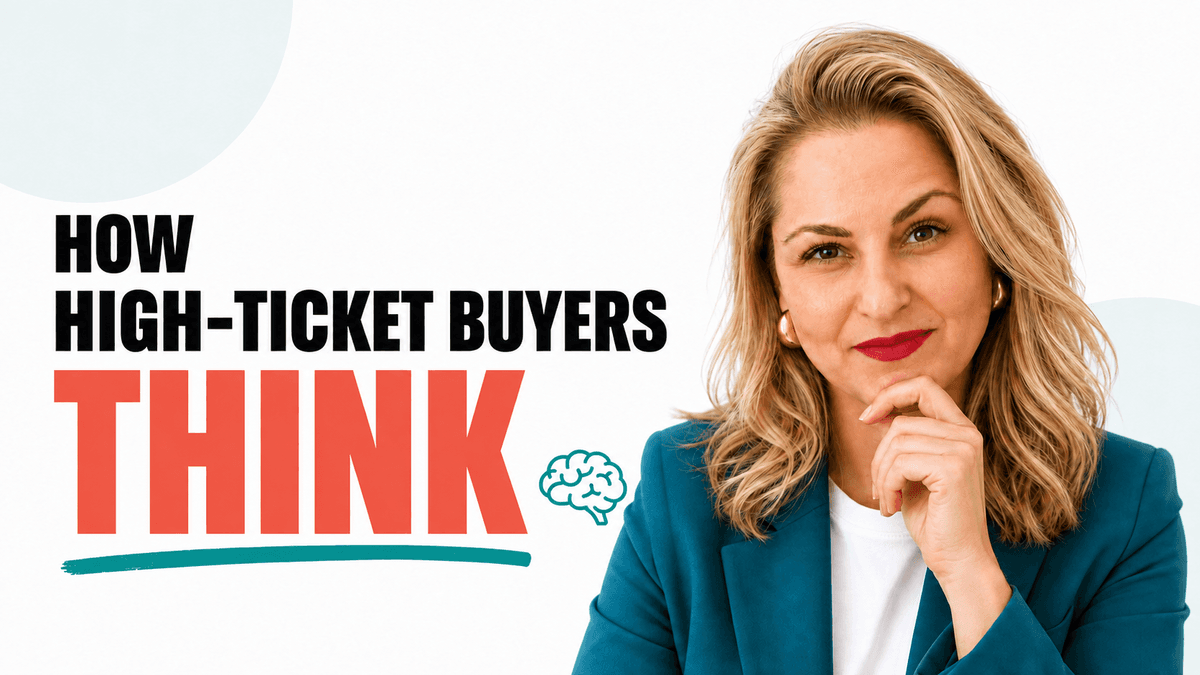
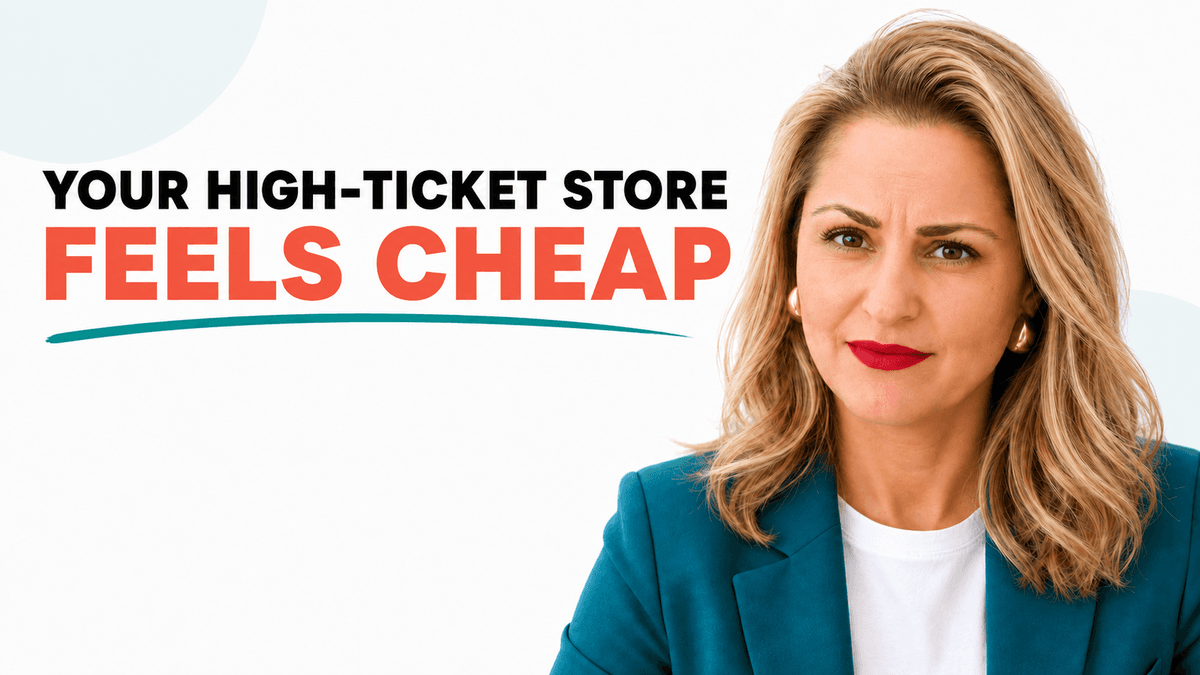
The logo for Dorit from Shop Innovator.

Dorit from Shop Innovator

, I know how much effort it takes to sell products that are worth $$$$ online.
The last thing you need is to manage technology.
After more than 20 years building e-commerce websites, it still surprises me when I meet retailers who spend hours every week dealing with website issues instead of doing what they do best: serving their customers.
That's why I've come to appreciate something that might sound a little strange:
Not because it does less.
But because it quietly does its job, leaving you and your team free to focus on what actually grows your business.
In this week's video, I compare Shopify and WooCommerce, share real client examples, and explain why simply moving to Shopify isn't the whole answer.
One thing is clear:
Your customers should be getting your attention.
Not your e-commerce platform.
I hope you find this valuable.
— Dorit
This post was published
Hi ,
Have you ever caught yourself thinking...
"Why do our products sell well in person but not online?"
Your products aren't the problem.
Customers walk into your showroom and buy.
They talk to your team. They ask questions. They compare options. They leave feeling comfortable spending thousands of dollars.
Then those same products go online...
...and suddenly people browse, disappear, and "think about it."
So what changed?
Not the product.
Not your reputation.
Something else.
In this week's video, I unpack 8 patterns I see over and over again after working with premium retailers for more than 20 years.
These aren't Shopify problems.
They're not marketing problems.
They're buying problems.
If your online store has never quite lived up to the success of your showroom, I think you'll see your business in this one.
I hope this serves you.
—Dorit
This post was published
, do you know why online people choose to buy from competitors and not from you?
What are they doing that you aren’t?
Better ads? More social media? Better emails?
Maybe.
But there may be a much simpler reason.
In my new video, I’m breaking down exactly that.
An image added to the post.
Having a great product doesn’t mean you’ll get the sale.
And if your competitors sell the same products at the same prices, the question gets even more important:
Why should the customer buy from you?
If you’ve ever looked at a competitor and wondered, “Why did they buy from them instead of us?” I think you’ll find this one useful.
—Dorit
P.S. I’m curious, why do you believe people should buy from you? What makes your products special? Reply and let me know.
This post was published
, can you map out the steps your customers go through when shopping in person?
It may look like this:
1. They drive past your store a few times.
2. A friend tells them about you.
3. They finally come in.
4. They walk around the showroom.
5. They touch the products.
6. They ask a few questions.
7. You explain why the $8,000 option costs more than the $5,000 one.
8. They go home to think about it.
9. Maybe they call with another question.
10. They come back with their spouse.
11. And eventually, they buy.
Maybe you've never called this a customer journey.
But you've been guiding people through one for years.
Now here's the harder question:
Can you map out that same journey for someone 1,000 miles away?
Someone who's never driven past your store.
Never heard your name from a local friend.
Never met you.
Never touched your products.
And may never set foot inside your showroom.
How do you sell to that person?
That's the journey you need to understand if you want to sell high-ticket products beyond your local market.
That's what this week's video is about
An image added to the post.
I break the online buying journey into six stages and we follow one customer who's considering a $4,000 pizza oven through every one of them.
You'll see what she's thinking at each stage.
What she needs from you.
Where uncertainty starts creeping in.
And what your website and marketing can do to help her take the next step.
Because a pretty website isn't the same as a sales process
This is something I see often with established retailers.
You've spent years building a reputation in your local market.
People know your family.
They know your store.
They trust your advice.
That reputation makes selling a $5,000 or $10,000 product easier.
But when you start selling nationally, you leave that advantage behind.
Now your website, content, reviews, emails, product pages, advertising and follow-up have to do the work that your reputation, showroom and salespeople used to do.
And that doesn't happen just because the website looks good.
It has to be designed as a journey.
Once you can see that journey step by step, you can start improving it step by step.
And that's how a business that's already trusted locally can start earning the confidence of customers nationally — or even globally.
You’ve already done the hard work of earning trust locally. I hope this helps you start carrying that trust further.
— Dorit
This post was published
Hi ,
You’ve been selling your products for 20, 30, maybe even 40 years.
You know what customers ask before they buy.
You know what makes them hesitate.
You know how to help someone feel comfortable spending thousands of dollars with you.
Then there’s ecommerce...
Suddenly, you’re expected to know why Google Ads aren’t working.
Why people are abandoning their carts.
Whether the problem is traffic or the website.
Whether you need a redesign, better emails, more content or a different strategy.
So you hire people who know those things.
An ads specialist.
A developer.
An email marketer.
Maybe an SEO agency.
And somehow...
you’re still the one trying to figure out why online sales aren’t where they should be.
How did this become your job?
That’s the question behind a video I made for established retailers trying to grow online.
Because the problem usually isn’t that you haven’t hired enough smart people.
It’s that each person owns their piece.
But nobody owns what happens when all those pieces come together.
And that leaves you doing a job you were never supposed to have:
Managing the managers.
Connecting the dots.
Deciding whose recommendation comes first.
Trying to determine why sales still aren’t growing.
All while running the actual business.
Your online store was supposed to become another sales channel.
Not another business for you to run.
So here’s the question I’d leave you with:
When something isn’t working online, who owns the outcome?
Not the ads.
Not the website.
Not the emails.
The outcome.
If that question hits a little too close to home, I think you’ll find this video worth a few minutes of your time.
Warmly,
— Dorit
This post was published
Hi ,
You've invested a lot into your website.
A designer made it look great.
A developer built it.
Maybe you've even redesigned it once or twice.
So when sales don't follow, it's frustrating.
Because from the outside, everything looks like it should be working.
If any of that sounds familiar...
This week's video is for you.
Over the years, I've audited hundreds of Shopify stores.
Here's what I've learned: a website can look beautiful and still be hard to buy from.
The photography is beautiful.
The branding feels premium.
Everything looks polished.
Until I start shopping.
I can't tell which product is right for me.
I have to hunt for shipping information.
I'm not sure what happens if I need to return it.
None of these things is a deal breaker.
But together, they create annoying speed bumps that can make someone leave.
Not because they don't want your product.
Because buying from you feels harder than it should.
That's what this week's video is about.
I'd love to hear if any part of it feels familiar.
— Dorit
This post was published
Can I make a guess, ?
You've been trying to grow your online store for years.
You've hired agencies.
You've paid consultants.
You've listened to people who sounded like they knew exactly what they were doing.
Sometimes things got a little better.
Most times... they didn't.
Now you're a little more careful about who you trust.
You have to be.
When you're selling premium products, one bad decision can cost months of lost sales.
If any of that sounds familiar...
You're exactly who I made this week's video for.
One thing we've learned after 20 years is this:
Most digital marketing agencies are built to grow their business—not yours.
As they get bigger, you get passed from one account manager to another.
The person who sold you disappears.
The strategy gets watered down.
You become another project in a queue.
We've built Shop Innovator to be the opposite.
When you work with us, you work with Art and Dorit.
The founders.
We're involved in the strategy, the hard conversations, and the decisions that shape your growth.
That's also why we only take on one new client each quarter.
Not because we want to be exclusive.
Because deep work takes time.
If you've ever felt like an agency sold you a great story... but left you alone to deal with the results...
I'd love to hear if any part of it feels familiar.
— Dorit
This post was published
Hi {{ first_name }},
Here's what most store owners miss about expensive purchases: adding to cart isn't a decision to buy. It's a bookmark.
It means "I want this. Now I need a reason to feel safe."
Most conversion advice is designed for a $60 buyer who decides in ninety seconds (i.e., countdown timers, discount pop-ups, free shipping bars)
Your buyer thinks differently. They're picturing the delivery truck. Wondering if it fits the room. Hoping they can reach a real person if something goes wrong.
Three things move that buyer:
1. Take away the risk. Returns, warranty, delivery, damage — answered before they have to go hunting for it.
2. Give them a reason they can say out loud. The specs, the materials, how long it lasts. People decide with their gut, then back it up with facts.
3. Show them what happens after they click buy. The delivery. The setup. The first week of owning it.
I walk through all of it in this week's episode, including what to change on your product page to make each one land:
Hope this is helpful.
Want me to create a video about a topic that interests you? Reply to this email.
— Dorit
p.s. Have an online store selling a high-ticket product in the home & garden category? If you're ready to turn your website into a great salesperson, apply for a free website audit.
This post was published
Hi {{ first_name }},
For years, I've been giving clients the same advice:
Start a YouTube channel.
Not only because video is trendy.
Because it's one of the fastest ways to show potential customers the expertise behind your brand before they decide whether you're the right brand to buy from.
Funny thing is, I wasn't following my own advice...
Since 2009, Art and I have been building Shop Innovator almost entirely through referrals. People who already know us, trust us, and send other great businesses our way.
But if you've never met us?
We're just another agency with a website.
So we fixed that.
We launched The Shop Innovator POV—a weekly YouTube series where we unpack the marketing challenges high-end online retail brands struggle with every day.
In the first episode, I explain why high-ticket buyers hesitate, and four ways your website can help them feel confident enough to buy.
I'll be publishing a new episode every week, each focused on a real challenge high-ticket retail brands face.
I hope you'll find them useful.
— Dorit
This post was published
Hi {{first_name}},
A few months ago, I sent you a cold email.
You responded because something about what I was offering was relevant to you.
But you never signed up to hear from me regularly.
That distinction matters to me.
Over the past 20 years, I’ve learned a lot about marketing high-ticket products online in the home & garden niche.
Not from theory.
From doing the work. Testing things. Getting things wrong. Seeing what actually makes someone spend thousands of dollars with a company they discovered online — and what quietly gets in the way of that sale.
Recently, I decided I should share more of what I’ve learned.
So I started a YouTube channel focused on marketing and selling high-ticket products on Shopify.
And now I’m going to share some of those ideas here, too.
I’m emailing you because we connected before, and I believe what I’m sharing could be genuinely useful to you.
But I also believe attention has to be earned.
So I’ll do my best to make every email worth opening.
And you can decide whether I succeed.
If you find these emails useful, stay.
If you don’t, unsubscribe below.
There’s absolutely no expectation that you remain on the list simply because we spoke once.
Either way, I appreciate the attention you’ve already given me.
Dorit
Co-Founder, Shop Innovator
We help scale high-ticket ecommerce stores
P.S. I'll share the first episode next week. If you decide to stay on my list you'll get it.
An image added to the post.
This post was published